In 2026, relying on ai for health for self-diagnosis carries significant safety risks. These include “hallucinations” (generating false medical facts), recommending dangerous drug dosages, and failing to secure data privacy. Since no AI chatbot is currently a licensed medical professional in the U.S., any output must be treated as purely informational and requires verification by a live specialist to prevent fatal diagnostic errors.
A Technological Revolution With a Safety Warning
For millions of Americans facing long wait times to see specialists, modern neural networks have become a tempting shortcut for medical advice. However, recent reports—including a New York Times feature from February 9, 2026—confirm that these technologies still operate in a “gray zone.” Today, even the most advanced medical ai chatbot remains a complex language model rather than a qualified expert capable of taking responsibility for a patient’s life.
The Primary Risks of AI in Modern Medicine
Clinical Inaccuracy and ``Hallucinations``
Inconsistent Recommendations

Why ``AI Doctors`` Cannot Replace Humans
Recognizing listeria symptoms can be challenging because the incubation period ranges from a few days to two months. Often, the onset of the illness coincides with typical pregnancy week symptoms, which can lead to a dangerous delay in seeking help.
Despite the rapid progress of ai in health care, virtual ai doctors lack clinical intuition and the ability to perform a physical examination. This creates critical gaps in diagnosis:
-
The Lack of Physical Contact: A program cannot palpate an abdomen, evaluate skin tone in person, or listen for heart murmurs.
-
The Ethical Barrier and Mental Wellbeing: While there is a major push for ai for mental health, experts warn that in crisis situations, a machine cannot provide true empathy and often misses non-verbal cues that signal the severity of a patient’s distress.
-
Systemic Bias: As reported by the BBC, algorithms are trained on data sets that often contain demographic biases. This results in less accurate diagnoses for women and members of various ethnic groups.
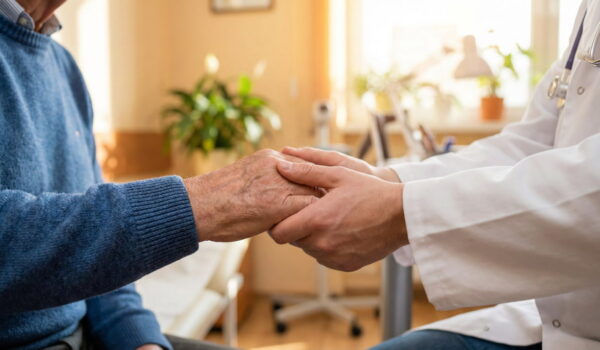
When Algorithms Fall Short: Professional Care at Your Doorstep
Given these risks of ai, it is clear that human health requires real clinical experience rather than statistical predictions. When a chatbot provides contradictory results and your health makes a trip to the clinic feel impossible, the most logical solution is Doctor2me.
This service restores the necessary balance between technology and human expertise. Instead of gambling on the random outputs of a search engine or a chatbot, patients in the U.S. can receive high-quality, licensed care right in their own homes.
-
Total Comfort: Skip the commute and the crowded waiting rooms. A doctor arrives at a time that works for you, conducting a thorough exam in the comfort of your home.
-
Guaranteed Accuracy: Unlike software, a Doctor2me professional carries full clinical and legal responsibility for your diagnosis, using certified medical equipment for every check-up.
-
Speed and Reliability: Requesting a home visit is often faster than waiting weeks for a specialist appointment, and it provides a level of certainty that no algorithm can match.
When your life is on the line, direct contact with a licensed physician remains the only way to ensure a trustworthy medical conclusion.

Legal Regulations and Data Privacy in the U.S.
The American Medical Association (AMA) and federal regulators emphasize that ai for health should be used strictly as a supplementary tool for organizing data or general research.
-
Privacy Threats: Most consumer-grade neural networks are not HIPAA-certified. Information about your symptoms and family history is often stored to train future models, creating a significant risk of personal data leaks.
-
Legislative Hurdles: As of January 1, 2026, several states—including California under law AB 489—have implemented strict rules. AI systems must be clearly labeled to prevent them from impersonating a live physician during interactions.
Technological advancement is opening new horizons, but the cost of a diagnostic error is too high for full automation. According to the consensus among experts in The New York Times, the smartest way to interact with AI today is to view its responses as a “rough draft” that must be verified and signed off by a professional.