While polio remains a devastating and incurable disease, the national strategy regarding the polio vaccine is undergoing a radical shift in 2026. Dr. Kirk Milhoan, the newly appointed head of the CDC’s Advisory Committee on Immunization Practices (ACIP), has publicly questioned the necessity of mandatory mass vaccination. His stance is based on the premise that with no active wild virus circulation within the country, the potential risks of vaccine side effects—however minimal—may now outweigh the statistical likelihood of an average American child contracting the disease.
A Paradigm Shift: The Philosophy of Kirk Milhoan
The appointment of Dr. Kirk Milhoan, an experienced pediatric cardiologist from Texas, to lead the CDC’s vaccine committee marks a significant departure from the traditional principle of “herd immunity” in favor of individualized medical decisions.
Dr. Milhoan points to a historical milestone: the United States has not recorded a case caused by the wild poliovirus since 1979. From his perspective, as long as the domestic threat remains minimal, current CDC immunization recommendations may be perceived as an overreach of government authority. The committee chair proposes moving polio immunizations from the “mandatory for school attendance” category to a “recommended” status, ultimately leaving the final choice to families.
Examining the Facts: WHO Data and the Modern Context
An objective assessment of the situation requires analyzing the data that leading infectious disease experts are using to challenge the ACIP’s new direction:
-
The Global Landscape: As of early 2026, polio remains endemic in Afghanistan and Pakistan. Reports from the Global Polio Eradication Initiative (GPEI) confirm a sobering reality: as long as the virus exists in even one region, the risk of it being imported into any other country remains a constant 24-hour threat.
-
The 2022 New York Precedent: The case in Rockland County remains a primary warning for experts. A confirmed case of paralysis in an unvaccinated patient proved that the poliomyelitis vaccine could have prevented the tragedy, yet the virus had already begun spreading silently within communities with low protection thresholds.
-
Infrastructure Monitoring: Regular wastewater testing in major American metropolitan areas continues to detect genetic traces of the virus. This provides direct evidence that the threat persists within the population, even in the absence of visible clinical outbreaks.
A Modern Approach: Personalized At-Home Vaccination
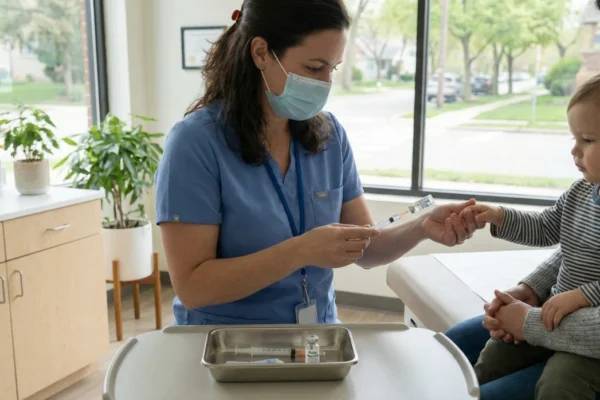
As the healthcare landscape transforms, many American families are seeking medical services that are more private and less stressful. Modern technological solutions now allow residents to receive a polio shot without the need to visit crowded clinics. The Doctor2me platform embodies this next-generation medical concept, where a qualified physician arrives at the patient’s home at a time that fits their schedule.
This personalized format allows parents to discuss the childhood immunization schedule in the comfort of their own living room. Among the specialists available through this service is Cleo Tsolakoglou-Williams, M.D., a board-certified family medicine practitioner based in Pasadena. Dr. Tsolakoglou-Williams specializes in comprehensive care for patients of all ages, offering both virtual consultations and house calls with a focus on disease prevention. Her professional expertise and the ability to book a doctor’s home visit help parents make well-informed health decisions.
An individual appointment eliminates exposure to potential pathogens in waiting rooms, and the vaccine vaccination itself takes place in a psychologically comfortable environment for the child. This approach allows families to follow medical protocols while maintaining emotional peace of mind.
Comparing Perspectives: Scientific Consensus vs. ``Individual Risk``
| Argument for Individual Choice | Position of the Epidemiological Community |
| Risk Assessment: Proponents of the new stance argue that even rare reactions become critical when the chance of encountering the virus is near zero. | Proven Efficacy: Three doses of the inactivated poliovirus vaccine (IPV) provide nearly 100% protection against the development of paralysis. |
| Medical Freedom: The thesis is that the state should not mandate preventative procedures for healthy children. | Asymptomatic Spread: The danger lies in the fact that 95% of those infected show no symptoms but remain active carriers of the virus. |
| Restoring Trust: It is suggested that voluntary procedures may help reduce skepticism toward official medicine. | Collective Security: Dropping population coverage by just 10% could trigger a resurgence of the disease on a national scale. |
Implications for U.S. Residents and the Evolving Shots Schedule
Should Dr. Milhoan’s proposals transform into official policy in various states, the socio-medical landscape of the country will undergo significant changes:
-
Liberalization of School Mandates: Immunization requirements for entering daycare or K-12 schools may become optional in several regions.
-
Formation of Local Risk Zones: In counties with low protection rates, the virus may gain the ability to circulate freely, creating a hazard for all unvaccinated residents.
-
Shifting Responsibility: The burden of health protection shifts exclusively to the parents. The concept of “herd immunity” ceases to be a safety guarantee if a significant portion of the community lacks antibodies.
Under these circumstances, medical experts strongly advise adhering to the established shots schedule coordinated with a personal physician to ensure reliable protection during critical stages of immune system development.