Sepsis is a life-threatening medical emergency where the body’s immune system overreacts to an infection, causing it to attack its own tissues. Maintaining septic health is a critical priority in the U.S. healthcare system; according to official data from the Centers for Disease Control and Prevention (CDC), at least 1.7 million American adults develop sepsis every year. This leads to over 350,000 deaths annually. To put this in perspective, one in every three hospital deaths in the United States involves sepsis. Despite being a leading cause of mortality in clinical settings, it remains a “silent killer” because many people lack the literacy to recognize its early warning signs.
A critical feature of this condition is where it originates. Research shows that up to 87% of all cases begin outside of hospital walls—right in the community. This means that the first line of defense and timely diagnosis often fall on the shoulders of family members, caregivers, and the patients themselves. The economic burden on the healthcare system is staggering: hospitalization costs for this diagnosis run into billions of dollars each year, with treatment expenses rising faster than inflation.
| Statistical Indicator | Value (U.S., Annually) | Data Source |
| Total adult sepsis cases | 1,700,000 | CDC |
| Sepsis-related mortality | 350,000+ | CDC |
| Cases starting outside the hospital | 87% | Sepsis Alliance |
| In-hospital mortality frequency | 1 in 3 | Official Statistics |
Pathophysiology: The Immune System’s Self-Destruction Mechanism
Tissue Damage and the Impact on Sepsis High Heart Rate
When the body faces a severe infection or physical trauma, it releases chemical messengers and proteins into the bloodstream. If the condition becomes systemic and you are septic in your body, these mediators cause devastating consequences:
-
Vascular Damage: Blood vessel walls become permeable (“leaky”), causing plasma to seep into surrounding tissues and leading to a critical drop in blood volume.
-
Microcirculation Failure: Inflammation promotes the formation of abnormal micro-clots that block small capillaries.
-
Organ Hypoxia: Due to disrupted blood flow, organs stop receiving essential oxygen, triggering organ failure.
As the condition progresses toward septic shock, blood pressure plummets. At this stage, doctors frequently monitor sepsis and heart rate changes, as a sepsis high heart rate is the heart’s desperate attempt to compensate for the lack of pressure. Laboratory tests often reveal elevated lactate levels in the blood—a direct sign that cells have switched to an emergency anaerobic metabolism due to oxygen deprivation.
The Role of Cytokine Storms
Etiology: From Respiratory Infections to Household Injuries
Sepsis is not contagious and is not caused by a single specific microbe; it is always a reaction to an existing infection. While about 90% of adult cases are triggered by bacteria, viruses (including influenza and COVID-19) or fungal pathogens can also be the catalyst.
Typical Sources of Infection
The pathological process most frequently develops from:
-
Lungs: Pneumonia remains the leading cause (up to 34.4% of cases).
-
Urinary Tract: Infections of the kidneys and bladder.
-
Digestive Tract: Appendicitis or gallbladder infections.
-
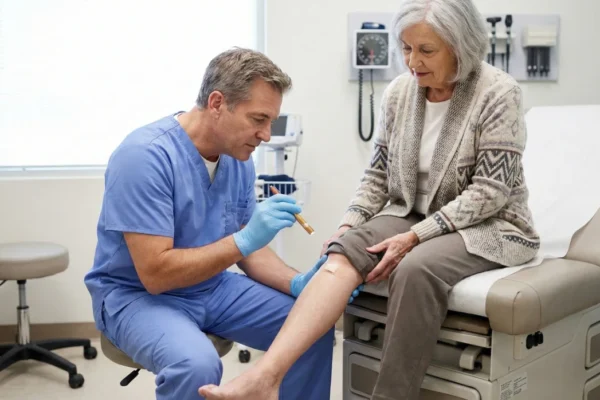
Skin and Soft Tissues: Even minor cuts can be entry points for Staphylococcus aureus. It is vital to recognize the external signs you have infection in your body, such as redness, swelling, or heat. For residents in Los Angeles, podiatry specialists like Arkady Kaplansky, DPM provide expert care for foot conditions and ingrown nails, preventing the risk of deep-seated infections in high-risk patients.
Hidden Triggers: Medical Implants and Post-Op Risks
Modern medicine relies heavily on indwelling devices such as catheters, stents, and artificial joints. These are frequent sites for “biofilms”—slimy layers of bacteria that are highly resistant to traditional antibiotics used for infections. Patients recovering from surgery must be hyper-vigilant for localized pain or heat around an incision site, as these “stealth” infections can transition into systemic sepsis without warning.
Animal-Related Risks: The Capnocytophaga Threat
Medical literature also highlights rare but fatal scenarios, such as septic body infection caused by Capnocytophaga canimorsus, a bacteria found in dog saliva. This can lead to a fulminant reaction even from a minor scratch or a dog lick on an existing wound. For detailed precautions, refer to this sepsis in dogs and pet hygiene safety guide.
At-Home Care: Speed and Convenience
When the question is sepsis how to diagnose, time is the most valuable resource. The Doctor2me platform provides patients with the ability to call a qualified physician directly to their home.
This service offers speed and comfort, eliminating the need for long waits in overcrowded emergency rooms. A doctor arriving at your door can perform an initial assessment to determine if a patient is becoming septic in your body. If necessary, specialists can organize on-site bacterial infection testing and promptly prescribe antibiotics. Starting treatment in the familiar environment of your home can significantly reduce stress and save precious time.
The TIME Algorithm: A System for Early Recognition
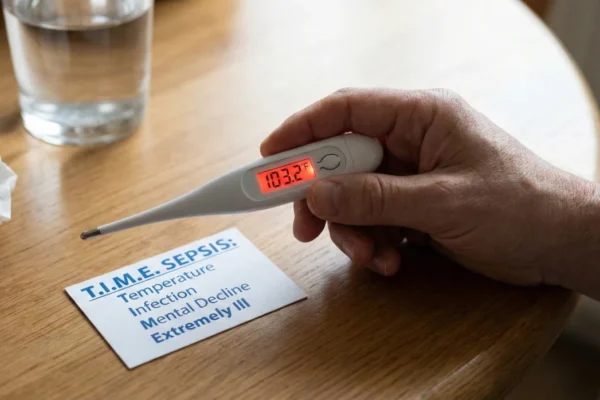
To improve survival rates, the international TIME acronym is used to identify the symptoms of blood infection at home:
- T — Temperature: Any deviation from the norm. Any deviation from the norm. A fever higher than 101°F (38.3°C) or a dangerous drop (hypothermia) below 96.8°F (36°C)
- I — Infection: Clear signs of illness such as a cough, a discharging wound, or pain during urination.
- M — Mental Decline: Confusion, disorientation, or unusual sleepiness.
- E — Extremely Ill: A subjective feeling of the “worst illness ever” or severe shortness of breath.
Beyond the Basics: Subtle Signs of Organ Dysfunction
Mobile Diagnostics and Specialized Support
When a person is septic, access to rapid testing is life-saving. Through Doctor2me, patients can access specialized mobile services:
-
Lab Work: Onsite Phlebotomy Solutions provides mobile blood draws and DNA testing throughout California.
-
Imaging: Gentry Imaging offers mobile X-rays and EKG services at home, which is critical for ruling out pneumonia or assessing heart function.
-
Primary Oversight: In Orlando, Florida, family nurse practitioner Wilnard Dastine focuses on preventative care and monitoring high-risk patients to stop complications before they start.

Advanced In-Home Monitoring
The ``Golden Hour`` and Treatment Strategy
The Hour-1 Bundle Protocol
Hospitals and mobile emergency teams now use “bundles”—a group of interventions that must be completed within 60 minutes:
-
Lactate Level Measurement: High lactate indicates tissue hypoxia.
-
Blood Cultures: Must be taken before antibiotics to identify the specific pathogen.
-
Broad-Spectrum Antibiotics: Targeting a wide range of bacteria while waiting for lab results.
-
Rapid Fluid Administration: Using crystalloid fluids to restore blood volume and prevent shock.

Rehabilitation and Post-Sepsis Syndrome (PSS)
Physical and Cognitive Impact
Holistic Recovery Pathways
Sources Used
- Sepsis | National Institute of General Medical Sciences https://www.nigms.nih.gov/education/fact-sheets/Pages/sepsis About Sepsis | Sepsis | CDC https://www.cdc.gov/sepsis/about/index.html
- Consider T.I.M.E. for sepsis | Mayo Clinic Health System https://sncs-prod-external.mayo.edu/hometown-health/speaking-of-health/consider-time-when-dealing-with-sepsis
- Sepsis Alliance Launches It’s About TIME National Initiative https://www.prnewswire.com/news-releases/sepsis-alliance-launches-its-about-time-a-national-initiative-to-encourage-early-lifesaving-detection-of-sepsis-a-medical-emergency-that-takes-a-life-every-2-minutes-300671950.html
- Sepsis Fact Sheet https://www.sepsis.org/downloads/sepsis-fact-sheet.pdf
- Saving lives: Treating Sepsis in the Golden Hour | UCLA Health https://www.uclahealth.org/sites/default/files/documents/2017_WSD_GoldenHour_SepsisEmergency_English.pdf
- Sepsis Symptoms & causes | Mayo Clinic https://www.mayoclinic.org/diseases-conditions/sepsis/symptoms-causes/syc-20351214
- Influenza and Sepsis Signs | Mayo Clinic News Network https://newsnetwork.mayoclinic.org/discussion/influenza-and-sepsis-mayo-expert-describes-warning-signs-of-severe-sepsis-septic-shock/
- Capnocytophaga canimorsus Case Report | PMC https://pmc.ncbi.nlm.nih.gov/articles/PMC12035970/
- Complete Hour-1 Sepsis Bundle Study | PMC https://pmc.ncbi.nlm.nih.gov/articles/PMC8579988/
- Sepsis Fact Sheet | ACEP https://www.acep.org/siteassets/uploads/uploaded-files/acep/quality/sepsis-fact-sheet.pdf
- Wisconsin man losing limbs to dog lick infection | Fox News https://www.foxnews.com/health/wisconsin-man-determined-to-walk-again-after-losing-limbs-to-dog-lick-infection
- Get Ahead of Sepsis Toolkit | CDC https://www.cdc.gov/sepsis/php/toolkit/index.html
- Sepsis Alliance TIME Whitepaper https://www.sepsis.org/wp-content/uploads/2019/06/Sepsis-Whitepaper-r6.pdf
- Sepsis third leading cause of death | AAMC https://www.aamc.org/news/sepsis-third-leading-cause-death-us-hospitals-quick-action-can-save-lives