This is for informational purposes only. For medical advice or diagnosis, consult a professional.
An oral surgeon is a dental specialist who handles harder problems in the mouth and jaw, such as difficult teeth removal, jaw repair, and placing dental implants. If you have lost a tooth, dental implants are one of the most reliable ways to replace it. They look and work like natural teeth, and for most healthy older adults in Pasadena, age alone is not a reason to skip them.
Before any oral surgery, it helps to be in good overall health. A Doctor2me doctor can check you at home, review your medicines, and make sure conditions like diabetes or high blood pressure are under control, so you can find and book the right care with confidence.
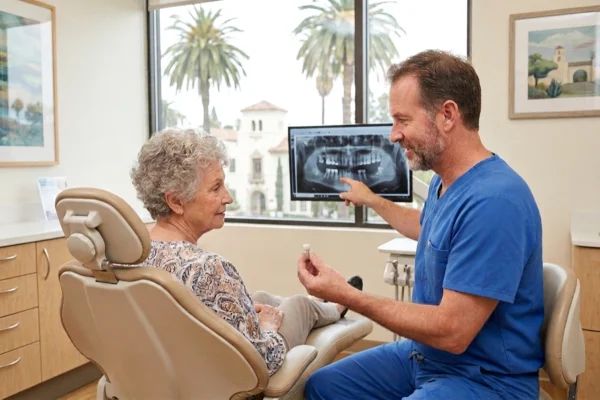
What Does an Oral Surgeon Do?
When You Might Be Referred
- Removing impacted, broken, or badly decayed teeth
- Complex teeth removal that a general dentist cannot do safely
- Placing dental implants and rebuilding lost bone
- Treating jaw pain, cysts, or injuries to the face and mouth
Oral surgeons also play a key role in spotting problems early. During an exam they check the soft tissues of the mouth, which is one of the best ways to catch warning signs, including the early signs of oral cancer.
Oral Surgery for Dental Implants
Dental Implants for Missing Teeth
How Dental Implants Work
Are Implants Right for Older Adults?
The Implant Process Step by Step
Exam and Planning
Tooth Removal and Implant Placement
Bone Grafting When Needed
Understanding Cost and Planning Ahead
What Affects the Price
Payment Plans and Questions to Ask
- What is included in the quote, from start to finish?
- Will I need bone grafting, and how does that change the plan?
- What payment plans for dental implants do you offer?
- How many visits will the treatment take?
How Implants Compare to Dentures and Bridges
Dentures and Bridges
Why Many Seniors Choose Implants
Protecting Your Health Before and After Surgery
Getting Medically Ready
Caring for Your Implants Long Term
Healing Well at Home
Frequently Asked Questions
Should a 70-year-old get dental implants?
Often, yes. For a healthy 70-year-old with good gums and enough jawbone, implants can be a great choice. Age by itself is not a barrier. Your overall health and a dental exam matter far more than your birthday.
How successful are dental implants for older adults?
Very successful. Studies show implants work well into older age, with success rates around 95%. Healthy gums, enough bone, and well-controlled health conditions give the best results. A specialist can tell you what to expect in your case.
Can an 80-year-old have a dental implant?
Yes, many 80-year-olds get implants and do well. The key is overall health, not age. If conditions like diabetes are managed and the jawbone is strong enough, an 80-year-old can be a good candidate.
Can you get dental implants if you have bone loss?
Usually yes, but you may need a bone graft first. Dental grafting rebuilds the thin jawbone so it can hold an implant. The graft needs a few months to heal before the implant is placed.
What affects the cost of dental implants?
Cost depends on how many teeth you are replacing, whether you need grafting, and the type of crown used. Because every mouth is different, only a personal exam can give you a real quote. Ask the dental office about payment plans.
How long does the dental implant process take?
It usually takes a few months from start to finish. The jawbone needs time to fuse to the implant before the final crown goes on. If you need a bone graft first, the timeline is a little longer.