This is for informational purposes only. For medical advice or diagnosis, consult a professional.
Preventing foot problems is all about following a daily routine of checking your skin, keeping your feet clean, and avoiding too much pressure on them. Seniors can stop serious issues from starting by spotting warning signs early, keeping the skin healthy, and getting help from experts when needed.
Why Do Seniors Need to Watch Their Feet So Closely?
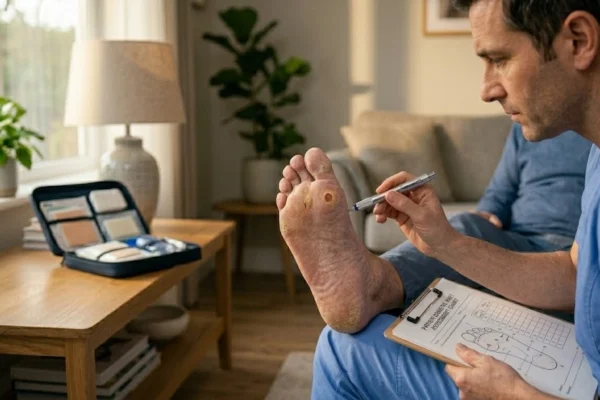
The Hidden Dangers of Nerve Damage and Poor Healing
| Problem | What Happens to the Body | Why It’s Dangerous |
| Nerve Damage | You lose the ability to feel pain | You won’t feel a cut or a blister |
| Dry Skin | The skin stops making natural oil | The skin cracks and lets in germs |
| Poor Blood Flow | Less oxygen gets to the skin | Small wounds take a long time to heal |
Understanding the Risks as You Age
- No Warning Signs: Because you might not feel pain, small scrapes can turn into serious sores.
- Bone Changes: Long-term pressure can cause the bones in the feet to weaken or change shape.
- Fast Infections: Since your body can’t send enough blood to heal wounds, infections can spread very quickly.
How to Set Up a Good Daily Routine at Home
Checklist for Checking and Cleaning Your Feet
- Morning Inspection: Look for any red spots, swelling, or small cuts. Use a mirror if it is hard to bend down.
- Check the Water: Always use a thermometer to make sure the bath water is under 95 degrees. Never trust your own sense of heat.
- Drying: Pat your feet dry gently. Be very careful to dry the skin between your toes.
- Moisturize: Use a plain lotion on the tops and bottoms of your feet, but skip the areas between the toes.
- Nail Care: Cut your nails straight across. Use a nail file to smooth any sharp edges instead of heavy clippers.
Choosing the Right Shoes and Staying Safe Indoors
| What to Look For in Shoes | Why It Helps |
| Wide Toe Area | Gives your toes room and prevents pressure |
| No Inside Seams | Keeps the shoe from rubbing and causing blisters |
| Soft Insoles | Spreads your weight evenly across the foot |
| Breathable Fabric | Keeps your feet dry and cool |
Where to Find Help in the San Gabriel Valley
Specialized Foot and Wound Care
Bringing Medical Care to Your Home
According to recent research in the American Diabetes Association’s journals, regular foot examinations are the primary defense against lower-extremity amputations in geriatric populations.
Local Community Resources
- Diabetes Education: Huntington Health in Pasadena runs six-week classes to teach you how to manage your health at home.
- Rehabilitation: USC Arcadia Hospital offers physical therapy for seniors who need help moving better after an injury.
- Balance Training: The Sy Graff Fitness Center at the Pasadena Senior Center offers exercises to help you stay steady on your feet.
- Food Assistance: The San Gabriel Valley Service Center in South El Monte provides food for local families, which is vital for keeping a healthy diet.
How Can You Ensure Long-Term Health and Stability at Home?
To keep your health completely stable, focus on these core pillars:
- Maintain unwavering consistency with your morning weigh-ins and blood pressure logs.
- Keep your three-zone chart posted prominently on your refrigerator for quick access.
- Adhere strictly to your low-sodium dietary boundaries and fluid limitations every day.
- Communicate openly with your healthcare team at the first sign of physical changes.
Living with a chronic cardiovascular condition is a significant life adjustment that requires patience and dedication. By staying highly organized and utilizing local support systems effectively, you can avoid unnecessary hospital visits. You can look forward to a stable, comfortable, and fulfilling life right in your Pasadena home.
Frequently Asked Questions
Why is daily foot inspection so important for seniors with diabetes?
Since nerve damage often leads to a loss of feeling, you may not notice small cuts, blisters, or skin tears on your feet. Regular daily visual checks are the only way to catch these minor injuries before they develop into serious foot ulcers.
Can I walk barefoot at home if I have type 2 diabetes?
No, you should never walk barefoot, even on soft surfaces inside your house. Wearing proper shoes with a wide toe box acts as protective armor against hidden hazards that could cause unnoticed trauma to your feet.
What is the safest way to manage dry skin and calluses?
You should apply a plain, unscented lotion to your feet to keep the skin hydrated and prevent cracks, but always avoid the spaces between your toes. For calluses, gently use a pumice stone after washing, and never use sharp tools or chemical removal pads to treat them at home.
How do I know if I have nerve damage in my feet?
Early signs often include a feeling of numbness, tingling, or unusual temperature changes, such as feet that feel cold even in a warm room. If you notice any changes in skin color, swelling, or loss of sensation, you should schedule a professional podiatric exam immediately.
When should I seek professional medical help for my feet?
You should consult a specialist like Arkady Kaplansky, DPM if you notice thick nails, persistent calluses, or any signs of a wound that does not heal quickly. Professional intervention is essential to prevent these issues from escalating into severe complications that threaten your mobility.
How can a mobile medical service like Doctor2me help with foot care?
Doctor2me allows seniors who are homebound or have difficulty traveling to receive professional foot checkups in the comfort of their own homes. This service reduces the stress and physical risk of visiting a clinic, ensuring you get consistent, professional monitoring without the hassle of a crowded waiting room.