This overview is for informational purposes only and is not an endorsement. Services, availability, and licensing can change – please verify current details directly with the facility.
Searched for an endoscopy near me in Pasadena? This is one of the places that comes up: a small outpatient center built for scope procedures.
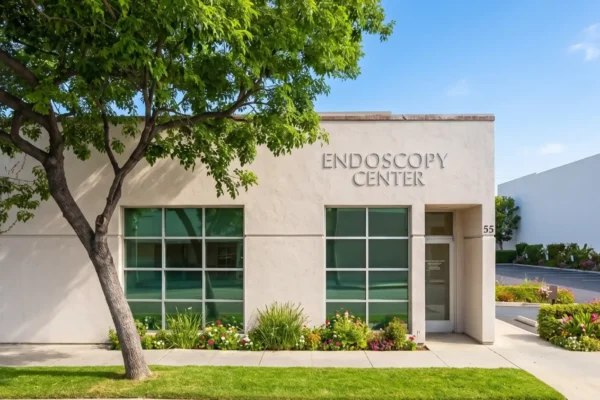
Pasadena Endoscopy Center sits at 55 W Valley St, Pasadena, CA 91105, just west of the Arroyo and a short drive from central Pasadena. National provider records list it as an endoscopy clinic under NPI 1336247642, with California state license 930000974 and the phone number (626) 793-9900.
An endoscopy center is not a hospital and not a doctor’s office. It is a licensed outpatient facility where gastroenterologists perform colonoscopies and upper endoscopies with sedation, and where you go home the same day rather than staying overnight.
Why Go to an Endoscopy Center Instead of a Hospital?
In practice that usually means earlier start times, shorter waits, and staff who do the same handful of procedures every day. It also means a quieter arrival than a hospital lobby, which matters more than people expect when they are already nervous.
What a center like this cannot do is handle an emergency. If you are bleeding heavily, in severe pain, or otherwise unwell right now, that belongs at an emergency room, not a scheduled appointment. A booked procedure is for planned testing and screening.
Who Needs a Colonoscopy, and How Often?
Colonoscopy is not the only option. Stool tests done at home, flexible sigmoidoscopy, and CT colonography are also recommended screening tests, though if one of those comes back abnormal, a colonoscopy is still needed to finish the process. Your own doctor decides which fits you.
Some people need to start earlier or repeat more often, including anyone with inflammatory bowel disease, a personal or family history of colorectal cancer or polyps, or a genetic syndrome that raises risk. A colonoscopy is also used to explain symptoms rather than to screen.
Screening works because it catches growths before they become a problem. Colorectal cancer almost always develops from polyps, and as NIDDK (2023) explains, the doctor can find and remove most polyps during the same procedure, which is why removing them early may prevent cancer entirely.
Colonoscopy Prep: The Diet and Instructions Before Your Procedure
The Colonoscopy Diet, Day by Day
Several days before the procedure you may be asked to avoid high-fiber foods such as whole grains, raw vegetables, beans, nuts and seeds. This is what people mean by a low residue diet for colonoscopy. Then, for a day or more before, you switch to clear liquids only.
Clear liquids contain no pulp, solids, or cream. Water, plain tea or coffee without milk, fat-free broth, pulp-free apple or white grape juice, lemon or lime sports drinks, and plain gelatin usually qualify. Red and purple colors are often excluded because they can look like blood on camera.
The table below shows how a typical schedule is laid out. Your own instructions may differ, so treat this as a shape rather than a rule, and call the center if anything is unclear before you start rather than improvising halfway through the evening.
| When | What usually happens |
|---|---|
| Several days before | Cut back on high-fiber foods: whole grains, raw vegetables, beans, nuts, and seeds |
| The day before | Clear liquids only; start the bowel prep at the time written in your instructions |
| The night before and the morning of | Finish the rest of the prep on schedule; stay near a bathroom |
| Procedure day | No driving yourself; bring the ride home you arranged in advance |
Colonoscopy Prep Options and the Cleanse Itself
The prep will cause diarrhea, so plan to stay close to a bathroom and clear your evening. Finishing the whole prep matters more than finishing it comfortably, and if side effects are stopping you from completing it, call the center rather than quietly giving up.
Tell the booking team about every medicine, vitamin, and supplement you take well before the date. Some need to be paused or adjusted around a scope procedure, and that conversation belongs with the prescribing doctor rather than with a search engine.
What Actually Happens During the Procedure
Colonoscopy
Polyps found along the way can be removed and sent for testing during the same procedure, and you will not feel it. Afterwards you stay at the center for roughly 30 to 60 minutes while the sedation wears off, and you may feel bloated or crampy for the first hour.
Upper Endoscopy
You may be given a numbing gargle or throat spray so the scope does not make you gag, and the scope does not interfere with your breathing. A mildly sore throat, some bloating, or nausea afterwards are common and usually settle quickly.
Serious problems are uncommon with either procedure but not impossible, and the center will give you written instructions about what to watch for and who to call. Keep that sheet somewhere you will find it the next morning, not in the bottom of a bag.
Nervous About a Colonoscopy or Endoscopy? That Is Normal
Naming which one is bothering you helps, because each has a different answer. Worry about the prep is answered by a clear schedule. Worry about dignity is answered by the fact that staff here do this dozens of times a week and are draped, practiced, and matter-of-fact about it.
Worry about sedation is answered by asking exactly what you will be given and how awake you will be. Worry about results is harder, and it deserves to be said out loud rather than carried alone into the room. Most colonoscopies find nothing, or find polyps that are removed on the spot.
Sleep, information, and company all help. Arrange your ride the week before rather than the night before, ask someone to sit with you in the waiting area, and write your questions down, because sedation has a way of erasing the ones you were planning to ask.
Why Bedside Manner Matters More Here Than Almost Anywhere
You are allowed to interview them. The CDC (2026) suggests asking which test the doctor recommends and why, how to prepare, whether the procedure will be uncomfortable, what the risks are, how much time off work you will need, and when and from whom you will get results.
Two more questions belong on that list for a scope: who will actually perform the exam, and whether you should bring someone with you. A doctor who answers those plainly, without rushing or bristling, is giving you useful information about more than the procedure.
If a referral has left you unsure what was ordered or why, that is worth sorting out before the prep starts. The same problem shows up with imaging orders, and the fix is the same: ask until the answer makes sense in plain words. Nobody should be drinking a bowel prep while still guessing what the test is for.
Getting There, Getting Home, and Help Afterwards
If nobody in the family can take the day off, a companion service can fill the gap. A Better Solution In Home Care provides personal care and post-discharge support in the north Los Angeles County area, which can cover the drive home and the first quiet hours afterwards.
Most people are back to a normal diet by the next day, though the sedation lingers longer than it feels like it does. Keep the rest of the day clear of driving, work decisions, and anything you would not want to redo.
If a question comes up a day or two later and your gastroenterologist is not reachable, a doctor who can see you at home is one option, and a walk-in clinic is another for something minor. Anything sudden and severe still goes to the emergency room.
Planning Your Visit to Pasadena Endoscopy Center
Procedures here are scheduled through a referring gastroenterologist rather than booked directly, so the first call is usually to the doctor’s office rather than to the center. Ask them to confirm which facility your procedure is booked at, since Pasadena has more than one.
Before the date, check three things: that your insurance covers the procedure at this facility, that you have written prep instructions in hand, and that your ride is confirmed. Screening tests are covered by most plans without a deductible or co-pay, but confirming beats assuming.
Staying on top of screening is one of the least glamorous and most useful things you can do in your forties and fifties, alongside keeping an eye on changing skin spots and the rest of the routine checks. Book it, prep properly, and get the day behind you.
Sources Used
Screening for Colorectal Cancer – Centers for Disease Control and Prevention (2026)
Talking with Your Doctor about Colorectal Cancer Screening – Centers for Disease Control and Prevention (2026)
Upper GI Endoscopy – National Institute of Diabetes and Digestive and Kidney Diseases (2023)