This is for informational purposes only. For medical advice or diagnosis, consult a professional.
A small patch of red, tender skin over a hip, heel, or tailbone is easy to miss when you are caring for a parent who spends most of the day in bed. Yet that patch is often the first stage of a bedsore. Knowing the bedsores stages, the earliest signs of pressure sores developing, and how to prevent them can help a family act before a minor mark turns into a deep, slow-healing wound.
Why an Early Red Patch Matters
People most at risk are those who cannot easily change position, such as a bedbound or wheelchair-using parent. The Mayo Clinic notes that limited movement, moisture from incontinence, poor nutrition, reduced sensation, and age over 70 all raise the risk. Understanding these risk factors helps caregivers know where and how often to check.
What Causes Pressure Wounds
For a bedbound parent, these forces are at work every hour of the day, especially over the tailbone, hips, and heels. That is why small, steady habits – repositioning, smoothing out wrinkled sheets, and keeping skin dry – matter far more than any single big intervention.
Why Pressure Injuries Are Worth Preventing
Bedsores Stages, From First Signs to Deep Wounds
Stage 1: Red, Unbroken Skin
Stage 2: A Shallow Open Sore
Stage 3: Into the Fatty Layer
Stage 4: The Deepest Wounds
Where Pressure Wounds Form
Pressure Ulcer Prevention at Home
Reposition Often
Protect the Skin
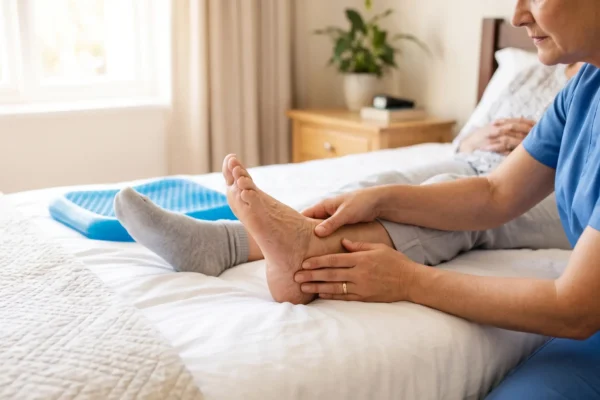
Moisture is a quiet driver of skin breakdown, so managing incontinence is part of prevention. MedlinePlus advises cleaning and drying the skin right after any urine or bowel movement, avoiding harsh soaps and talc powder, and asking a provider about barrier creams. Clothing and bedding should be smooth and free of thick seams, buttons, or wrinkles that can press into the skin, and small objects should be kept out of the bed. A quick head-to-toe skin check once a day – heels, ankles, hips, tailbone, shoulder blades, and the back of the head – catches problems while they are still easy to reverse.
Support Surfaces and Nutrition
Caring for a Wound and Knowing When to Get Help
Support With Care at Home
When to Call for Help
Frequently Asked Questions
What are the early signs of pressure sores developing?
The earliest sign is usually a patch of red or discolored skin that does not fade, often over a bony area like the tailbone, hip, or heel. The spot may feel tender, warmer, cooler, softer, or firmer than the skin around it. On darker skin, changes in texture and temperature can be easier to notice than color.
What are the four bedsores stages?
Stage 1 is red, unbroken skin. Stage 2 is a shallow open sore or blister in the top layers of skin. Stage 3 reaches into the fatty layer. Stage 4 is the deepest, exposing muscle, tendon, or bone. The higher the stage, the longer healing takes and the greater the infection risk.
How is a stage 1 bedsore treated?
Stage 1 care focuses on relieving pressure immediately, keeping the skin clean and dry, and checking the area often. Repositioning and protecting the skin usually allows it to recover before it breaks open. If it does not improve within a day or two, contact a healthcare professional.
How can caregivers help prevent pressure wounds?
Reposition the person about every one to two hours in bed and every 15 minutes in a chair, keep skin clean and dry, use pressure-relieving cushions or mattresses, avoid doughnut cushions, support good nutrition and hydration, and inspect the skin daily for early changes.
When should I call a doctor about a bedsore?
Call if a red area does not improve within 24 to 48 hours after relieving pressure, or right away if you notice signs of infection such as fever, pus or drainage, a foul smell, or increasing warmth and swelling around the sore. Deep or non-healing wounds should be seen by a wound specialist.
How long do pressure sores take to heal?
It depends on the stage. Early sores can improve quickly with pressure relief, while deeper stage 3 and stage 4 wounds may take weeks or months, and some never heal completely. Consistent daily care and professional support give the best chance of healing.