This is for informational purposes only. For medical advice or diagnosis, consult a professional.
high-impact nature of the asphalt surface by optimizing your foot and ankle biomechanics. Direct clinical data from 2025 indicates that running on asphalt generates a vertical ground reaction force approximately 2.5 to 3 times your total body weight with every single step.
This means a 170-pound runner must absorb over 500 pounds of force per strike. By implementing a routine that includes specific feet care, utilizing targeted arch supports for running, and ensuring your footwear matches the terrain, you can reduce the compensatory strain on your knee joints by up to 28%.
Addressing these factors at the foundational level stops the “Rose Bowl Knee” before it starts, allowing you to transition safely from winter inactivity to a vigorous spring schedule in Pasadena.
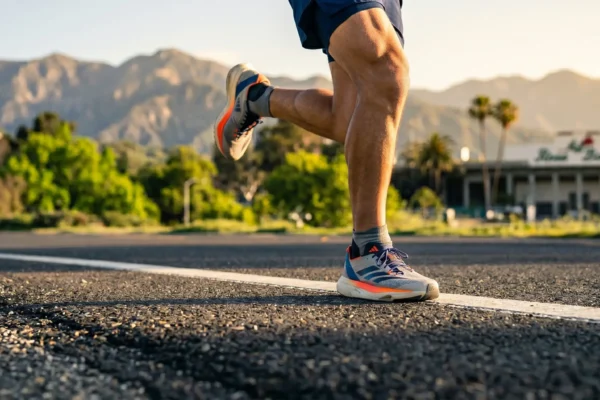
Why the Pasadena Terrain Causes ``Rose Bowl Knee``
When you run on such a rigid surface, your body relies on a kinetic chain that starts at the foot and ends at the hip. If your ankle lacks the necessary range of motion, the force from the ground cannot be dissipated effectively. This force travels upward, where the knee joint often becomes the primary point of failure.
Local experts emphasize that the slight, consistent bank of the road can also contribute to lateral knee strain. This imbalance forces one leg to over-pronate while the other works to stabilize, leading to the classic symptoms of iliotibial (IT) band syndrome or patellofemoral pain.
Strengthening Your Foundation for Spring Activities
A consistent routine of eccentric calf raises and “towel curls” with your toes can significantly improve your stability. These exercises build the structural integrity needed to handle the repetitive stress of the loop. Strengthening the posterior chain ensures that your muscles, rather than your cartilage, absorb the energy of each stride.
When analyzing gait patterns and lower-extremity alignment, independent specialists such as Arkady Kaplansky, DPM, often identify subtle mechanical flaws that lead to chronic pain. It is important to understand that such independent practitioners are not affiliated with or coordinated by any specific medical centers or health organizations.
Seeking an assessment from a qualified professional can help you identify if you need corrective exercises before increasing your weekly mileage.
Essential Equipment for Pavement and Trail
Footwear Comparison for Pasadena Athletes
| Feature | Road Running Shoe | Trail Shoe | Hiking Shoe |
| Primary Surface | Asphalt (Rose Bowl Loop) | Dirt/Gravel (Eaton Canyon) | Rugged/Rocky (Mt. Wilson) |
| Outsole Grip | Smooth, high-durability rubber | Multi-directional lugs | Deep, rigid traction |
| Flexibility | High (for energy return) | Medium (for stability) | Low (for joint protection) |
| Weight | Lightweight | Moderate | Heavy |
If you are running on a trail in the nearby San Gabriel Mountains, a dedicated trail shoe is necessary to prevent slips. These shoes feature a rock plate to protect the bottom of your feet from sharp stones and a reinforced toe box to prevent injuries from “stubbing” your foot on roots.
The Science of Internal Support
Utilizing Specialized Insoles
If your spring plans involve steep inclines and heavy packs, you should consider hiking insoles. These are typically stiffer than running inserts and are designed to manage the shifting center of gravity associated with mountain trekking. Proper alignment in your hiking shoe reduces the risk of fatigue-related injuries during long descents.
Protecting Your Skin and Extremities
Checklist for Skin and Joint Protection
- Anti friction cream: Apply generously to the heel, arch, and between toes to prevent shear-related blisters.
- Toe protectors: Use silicone caps if you are prone to “runner’s toe” during downhill sections of a hike.
- Heel pads: These can help lock the foot into the shoe, preventing the “heel slip” that causes deep tissue irritation.
- Ankle protectors: Essential for trail enthusiasts to keep small pebbles and abrasive dirt out of the shoe.
Friction management is a critical component of any long-distance training plan. For those interested in the science of skin repair and wound prevention, resources like GotWound.Com provide extensive educational materials on maintaining skin integrity during athletic stress. These educational platforms operate independently and do not have any collaborative or referral agreements with local hospitals or medical facilities.
Smart Recovery and Professional Support
Following the “10% rule” – never increasing your weekly distance by more than 10% – is a scientifically backed way to build tolerance. If you do experience swelling or sharp pain, the current 2026 medical consensus recommends the “PEACE & LOVE” protocol, which prioritizes soft-tissue management and gradual loading over total immobilization.
When an injury occurs, navigating traffic in Pasadena or Scottsdale to reach a clinic can be an added stressor. Doctor2me provides a direct solution by sending a licensed physician to your home for a private consultation.
This approach allows you to receive a professional evaluation in a comfortable environment, avoiding the long wait times and potential health risks associated with public waiting rooms. This service focuses on personalized care to get you back to your active lifestyle as quickly as possible.
Frequently Asked Questions
Why does my knee hurt after running the Rose Bowl Loop?
Knee pain on the loop is often caused by the repetitive impact of running on hard asphalt, which generates high vertical ground reaction forces. If your ankles are stiff or your feet lack proper shock absorption, this force travels upward and strains the knee joint.
Can arch supports for running reduce joint strain?
Yes, using proper arch supports for running helps stabilize the medial longitudinal arch and prevents excessive inward rolling, known as overpronation. This improved alignment ensures the kneecap tracks correctly, significantly reducing the risk of patellofemoral pain.
Should I choose a running shoe or a trail shoe for local Pasadena paths?
A standard running shoe is ideal for the flat pavement of the stadium loop, while a trail shoe is necessary for the uneven dirt of Eaton Canyon. Selecting terrain-specific footwear provides the necessary traction and stability to prevent ankle rolls and protective muscle guarding.
How do running insoles improve lower body biomechanics?
High-quality running insoles provide a stable base that redistributes pressure across the entire foot during the stance phase. This mechanical correction reduces the compensatory rotation of the shin bone, which is a primary cause of iliotibial (IT) band syndrome.
What is the most effective way to prevent blisters on long spring hikes?
Applying an anti friction cream to known hotspots and using silicone toe protectors can stop the shear forces that tear the skin. Maintaining an intact skin barrier prevents you from subconsciously altering your gait, which often leads to secondary knee or hip injuries.
What is the “PEACE & LOVE” protocol for running injuries?
This updated 2026 recovery standard replaces traditional icing with a focus on protection, elevation, and gradual loading of the injured tissue. It encourages natural cellular healing by avoiding anti-inflammatory interventions during the critical first 48 hours after a strain.
Sources Used
- A comparison of running biomechanics on track, asphalt, grass, and treadmill using wearable sensors – PubMed
- Strategies to prevent and manage running-related knee injuries: a systematic review of randomised controlled trials | British Journal of Sports Medicine
- Patellofemoral pain syndrome – Symptoms and causes – Mayo Clinic
- Review of PEACE and LOVE the new era of RICE in acute soft tissue injury management? – A narrative review – PMC