This is for informational purposes only. For medical advice or diagnosis, consult a professional.
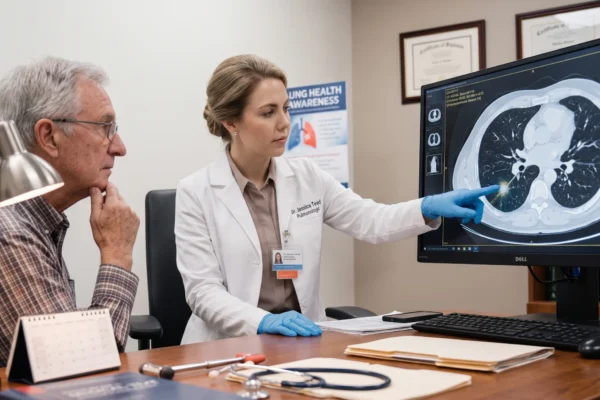
A low-dose CT lung cancer screening is a quick, painless scan that can find lung cancer early, often before any symptoms appear. The CDC says it is the only recommended screening test for lung cancer, and it is meant for people at high risk because of their age and smoking history. Catching lung cancer early, when it is small, gives treatment the best chance to work.
If you smoke now or used to, this scan could matter for you. Below is a plain-language guide to what a low-dose CT scan is, who should get one, and why early detection saves lives.
What Is a Low-Dose CT Lung Scan?
How the Scan Works
Low-Dose CT vs. a Regular Chest X-Ray
Who Should Get Screened?
- Are between 50 and 80 years old, and
- Have a 20 pack-year or more smoking history, and
- Smoke now or have quit within the past 15 years.
A lung scan for smokers and former smokers in this group can find cancer at its most treatable stage.
The Pack-Year Rule Explained
When Screening Should Stop
Why Early Detection Matters
Catching Lung Cancer Before Symptoms
What to Expect and the Risks
Risks: False Positives and Overdiagnosis
Getting Ready for Your Scan
Lung Cancer Risk and Quitting Smoking
Why Quitting Still Helps at Any Age
Testing Your Home for Radon
Bringing Care Closer to Home
At-home services round out the picture. Mobile providers such as Gentry Imaging bring tests like X-ray and EKG to where a patient lives, which is a real help for people who have trouble traveling. And because early detection is a theme across many cancers, it is worth knowing your other screenings too, such as the steps in this colorectal cancer screening guide and the comfort-focused options in this supportive cancer care guide. Together, these steps help catch problems early and keep care close to home.
Frequently Asked Questions
Who should get a low-dose CT lung cancer screening?
The CDC recommends yearly screening for adults aged 50 to 80 who have a 20 pack-year smoking history and either smoke now or quit within the past 15 years. A lung scan for smokers and former smokers in this group finds cancer at its most treatable stage.
How often should you get screened for lung cancer?
If you qualify, the guidelines call for a low-dose CT scan once a year. Screening continues each year until you turn 81, have not smoked for 15 years, or develop a condition that would make lung surgery unwise.
Is a low-dose CT lung scan safe?
Yes, it is considered safe for people at high risk. It uses a low dose of radiation, takes only a few minutes, and is painless. The main risks are false positives and overdiagnosis, which is why screening is limited to high-risk groups.
What happens during a low-dose CT lung scan?
You lie on a table while the scanner takes detailed pictures of your lungs. There are no needles or dye for a standard screening, and the scan is over in minutes. You can usually eat and take your medicines as normal beforehand.
When should lung cancer screening stop?
The CDC says yearly screening should stop once a person turns 81, has not smoked in 15 or more years, or has a health problem that makes lung surgery unsafe or unwanted.
Can you get a free lung cancer screening if you smoke?
Many hospitals and health systems host free lung cancer screening for smokers and former smokers as community events, often during Lung Cancer Awareness Month. Talk with a doctor to see whether a low-dose CT scan is right for you.