This is for informational purposes only. For medical advice or diagnosis, consult a professional.
Recovering at home after a hospital stay goes more smoothly when families plan ahead. The first days are about safe medicines, a safe home, good rest, and clear follow-up care. With the right support, most older adults in Pasadena heal well and avoid a return trip to the hospital.
You do not have to do it all alone. With Doctor2me, a doctor can come to the home the same day for a check-up or a new worry, so a tired senior skips the waiting room. You can also pick your own doctor through the Doctor2me provider network.
Start Planning Before Discharge Day
Understand the Discharge Plan
Make a simple list of next steps: which doctor to call, when the first follow-up is, and what supplies to pick up. Setting up follow-up care right away is one of the best ways to prevent another hospital stay.
The First Days at Home
Make the Home Safe
- Clear walking paths and remove loose rugs and cords
- Add night lights in the hallway and bathroom
- Put grab bars near the toilet and in the shower
- Keep daily items within easy reach to avoid bending or climbing
- Make sure your loved one wears non-slip shoes or slippers
Mayo Clinic shares more simple ways to prevent falls at home. It also helps to know what to do if a fall does happen, including how to safely lift someone who has fallen.
Manage Medicines Carefully
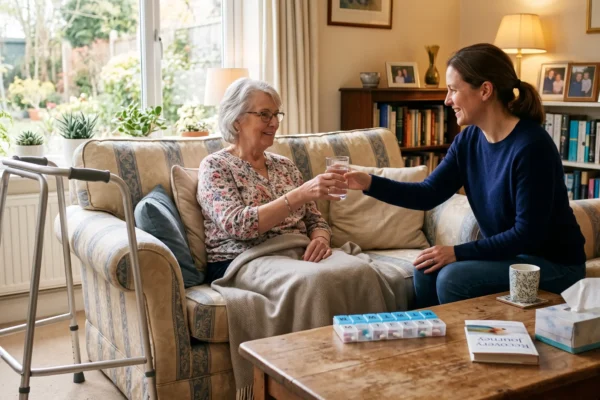
Use a pill organizer, keep an up-to-date list, and set phone alarms for each dose. If anything looks confusing, call the doctor or pharmacist before guessing. A missed or doubled dose is a common reason seniors end up back in the hospital.
Help With Rest, Food, and Fluids
Keep a water bottle within reach and offer drinks often, since older adults can get dehydrated without feeling very thirsty. Quiet days, gentle movement, and good sleep all give the body the energy it needs to recover. Watch for poor eating or drinking, because it can be an early sign that something is wrong.
Who Helps With Recovery at Home
Home Care vs. Home Health Care
This kind of home care assistance is non-medical. It covers cooking, light housekeeping, and safe trips to the bathroom. Steady in home care during the first weeks lowers the risk of a fall or a missed meal, and it gives the family peace of mind.
It helps to know the difference between two kinds of support. Home care services focus on daily living and company. An in-home caregiver visits to help with personal needs and safety. Home health care is medical: a nurse or therapist gives skilled care the doctor orders, such as wound care or injections.
Some seniors need both. Skilled home care services at home, such as nursing visits, can run at the same time as in-home care that covers both days and nights. When families compare home care care services, they look at the hours, the tasks, and whether any medical care is required.
When Therapy Is Part of Healing
For medical needs after discharge, such as wound care, IV medicine, or skilled nursing, an agency like 911 AM PM Home Health care can send licensed staff to the home. Pairing this care with same-day Doctor2me home visits keeps every part of recovery under one steady plan.
Keep Follow-Up Visits on Track
Schedule the first follow-up before you even leave the hospital if you can. To make each visit count, bring a few things:
- The current medicine list and the pill bottles
- The hospital discharge papers
- A short list of questions or new symptoms
- Notes on appetite, sleep, pain, and bathroom habits
When a clinic trip is hard on a weak senior, a home visit can take the place of a routine check, so care continues without the stress of travel.
Watch for Warning Signs
- A fever, chills, or a wound that turns red, warm, or leaks fluid
- New or worse shortness of breath, chest pain, or swelling in the legs
- Sudden confusion, a hard fall, or trouble waking up
- Not eating or drinking, or far fewer trips to the bathroom
- Pain that the prescribed medicine does not control
When something feels off but it is not an emergency, a prompt home visit can catch a small problem before it grows. For true emergencies, call 911.
Support for Family Caregivers
Take breaks, accept help, and lean on professional caregivers for a few hours so you can rest. A healthy caregiver gives better care, and the senior recovers in a calmer home.
Recovering After Specific Events
Whatever the reason, the same basics apply: follow the discharge plan, keep medicines straight, make the home safe, and stay in close touch with a doctor who knows the full story.
Frequently Asked Questions
What kind of help do seniors need at home after a hospital stay?
Most older adults need help with daily tasks like meals, bathing, and medicine reminders while they heal. Some also need skilled care, such as nursing or therapy. Many families use a mix of home care services and family support in the first weeks.
What is the difference between home care and home health care?
Home care is non-medical help with daily living, like cooking, dressing, and company. Home health care is medical care a doctor orders, such as wound care, injections, or physical therapy. Many seniors use both at the same time after a hospital stay.
How soon should in-home care begin after discharge?
It is best to have help ready on the day your loved one comes home, since the first days carry the highest risk. Setting up an in home caregiver before discharge means no gap in support. Even a few hours a day can prevent falls and missed medicines.
How can families lower the chance of going back to the hospital?
Follow the discharge plan, keep medicines organized, make the home safe, and go to every follow-up visit. Watching for early warning signs and calling a doctor quickly also helps. A same-day home visit can catch small problems before they become emergencies.
Do home caregivers help with medications?
Non-medical caregivers can remind a senior to take medicine and help organize a pill box, but they do not give injections or change doses. Skilled nurses from a home health agency can manage medical medication needs. A doctor or pharmacist should guide any changes.
Can an older adult recover at home instead of a rehab facility?
Many seniors recover well at home with the right support, including therapy and home care assistance. The best choice depends on how much medical care is needed and how safe the home is. Your doctor can help you decide what is right for your loved one.