This is for informational purposes only. For medical advice or diagnosis, consult a professional.
Memory changes are common after a stroke because a stroke cuts off blood flow to the brain and damages the cells that store and recall information. Some memory loss gets better over weeks and months with rest and rehab. Other times, thinking and memory problems last longer and need ongoing support. Knowing what to expect helps families stay calm and give the right kind of help.
Recovery goes more smoothly when a doctor keeps a close eye on things. With Doctor2me, families in Pasadena can pick a doctor and have them come to the home, so a stroke survivor can be checked in a familiar place without a stressful trip to a waiting room.
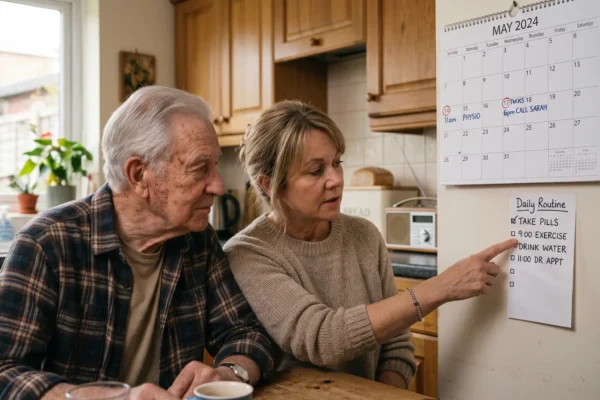
How a Stroke Affects Memory
What Happens in the Brain During a Stroke
Brain Parts That Store Memory
Why Memory Loss Happens After Stroke
Types of Memory Problems After Stroke
Short-Term Memory Loss
Verbal and Visual Memory
Other Thinking and Cognitive Impairment
Vascular Cognitive Impairment and Vascular Dementia
What Vascular Cognitive Impairment Means
Post-Stroke Dementia and Multi-Infarct Dementia
When Symptoms Appear
What Raises the Risk of Memory Problems
Risk Factors You Cannot Change
Risk Factors You Can Manage
- High blood pressure, which strains the brain’s blood vessels.
- Diabetes, which damages small vessels over time.
- High cholesterol and atherosclerosis, which narrow the arteries.
- Atrial fibrillation, an irregular heartbeat that can send clots to the brain.
- Smoking and being overweight, which both harm blood vessels.
Helping Memory Recover at Home
Rehab and Brain Training
Everyday Support and Routines
Medical Follow-Up After Stroke
Protecting Brain Health Going Forward
Heart-Healthy Habits
When to Call a Doctor
Frequently Asked Questions
Is memory loss permanent after a stroke?
Not always. Many people regain some or most of their memory in the weeks and months after a stroke, especially with rehab. Recovery depends on how big the stroke was and where it happened, and progress can continue for a long time with steady practice.
Can a stroke affect memory and mental capacity?
Yes. A stroke can damage the brain parts that handle memory, attention, and reasoning, leading to cognitive impairment. This may show up as forgetfulness, confusion, slowed thinking, or trouble planning. The effect varies widely from person to person.
How long does short-term memory loss last after a stroke?
There is no set timeline. Short-term memory loss often improves fastest in the first few months, when the brain heals most quickly. Some people recover fully, while others have lasting memory issues that they learn to manage with tools and routines.
How can I improve my memory after a stroke?
Work closely with your rehab team and practice memory exercises daily. Use calendars, checklists, and reminders, keep a steady routine, and stay physically active. Controlling blood pressure and other risk factors also protects your brain health and helps prevent further damage.
Can short-term memory loss be regained?
It often can be, at least in part. The brain can rewire itself, so healthy areas may take over some lost tasks through repetition and therapy. Consistent practice and support at home give the best chance of regaining short-term memory.
Does memory loss after a stroke mean dementia?
Not necessarily. Some memory loss after a stroke improves and never becomes dementia. But when thinking problems are severe or keep getting worse, it may be vascular dementia. A doctor can tell the difference and guide the right care.