This is for informational purposes only. For medical advice or diagnosis, consult a professional.
A red eye is as easy to brush off as a pink eye. Most of the time, that guess is right. But not every red eye is a pink eye. Sometimes the cause is uveitis, a deeper kind of eye inflammation that needs different care. This guide explains what uveitis is, how it differs from pink eye, and why a painful red eye deserves a closer look.
What Is Uveitis (Iritis)?
The word covers a group of conditions, not just one. What they share is inflammation in or near the uvea. The redness you see is only part of what is going on inside.
The uvea sits between the white of the eye and the retina. Its rich blood supply is part of why inflammation here matters. Nearby structures that focus light can be affected too.
The National Eye Institute explains that anterior uveitis, which affects the iris at the front of the eye, is the most common type. This form is often called iritis. Uveitis is most common in people between the ages of 20 and 60.
So iritis and anterior uveitis mean nearly the same thing. Iritis points to the iris, the colored ring of the eye. That is the area most often inflamed in this common form.
The Parts of the Eye Uveitis Can Affect
The front-of-eye form is the focus here, since it is the one most often mixed up with pink eye. It tends to come on fast and feel uncomfortable. Knowing the signs helps you act sooner.
Doctors sort the types by how long they last too. Some cases are short and settle with treatment. Others are longer lasting and need ongoing care.
Uveitis can also affect one eye or both. In the anterior form, one eye is often affected at a time. The eye may feel tender and look angry and red.
What Are the First Signs of Uveitis?
- Eye redness, often worse near the iris.
- Eye pain or a deep ache.
- Sensitivity to light, called photophobia.
- Blurred or reduced vision.
- Dark floating spots, or floaters.
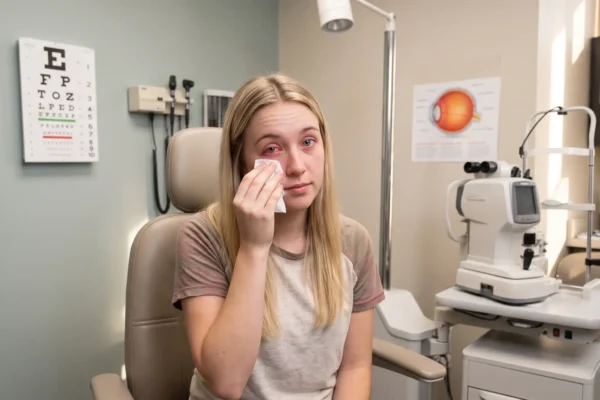
Pain and light sensitivity are important clues. Pink eye can itch and water, but it rarely causes deep pain. If a red eye hurts and light bothers you, uveitis is worth ruling out.
A small, irregular, or slow-reacting pupil can also appear. You may not notice this yourself. An eye doctor can spot it during an exam.
Some people first notice the redness that sits in a ring around the iris. Others feel a dull ache that gets worse in bright rooms. Vision may seem hazy, as if looking through a smudged lens.
Symptoms can build over hours or a day. They may be mild at first and then grow. Because they can worsen, an early exam is a smart move.
Not everyone has every sign. One person may notice mostly pain, another mostly blurriness. Any mix of these in a red eye is worth checking.
What Is the Difference Between Uveitis and Pink Eye?
The CDC notes that viral and bacterial pink eyes are very contagious and often cause discharge, itching, and watery eyes. Uveitis is not contagious and usually brings pain and light sensitivity instead of heavy discharge. Allergies can also redden the eyes, which you can read about in this guide to seasonal eye allergies.
Discharge is a helpful clue. Pink eye often leaves the lashes crusty, especially in the morning. Uveitis does not usually cause thick discharge like that.
Here is a simple way to compare the two:
- Pink eye: itchy, watery, gritty, often with discharge, and usually contagious.
- Uveitis: painful, light-sensitive, with blurred vision, and not contagious.
The overlap is what makes uveitis easy to miss. Both cause a red eye. The pain, the light sensitivity, and the lack of discharge help set uveitis apart.
There is another practical difference too. Pink eye often clears on its own or with simple care. Uveitis usually needs prescription treatment to settle down.
Treating uveitis like pink eye can waste time. Over-the-counter drops for redness do not fix the deeper problem. The inflammation keeps going while the real cause is missed.
If you are not sure which one you have, it is safer to get checked. An eye doctor can tell them apart quickly. Guessing wrong can delay the care uveitis needs.
What Causes Uveitis?
Conditions and Triggers Linked to Uveitis
Because of that link, an eye doctor may ask about joint pain, back stiffness, or other symptoms. Finding a related condition can guide treatment. It can also help prevent future flares.
Some infections, such as shingles near the eye, can also cause uveitis. So can a blow or scratch to the eye. In children, it is sometimes tied to certain kinds of arthritis.
Even with testing, many cases stay unexplained. That does not change how it is treated. The focus stays on calming the inflammation and protecting your sight.
If uveitis keeps coming back, that pattern is a clue. It may point to an underlying condition worth exploring. Your eye doctor can help connect the dots with your other care.
Who Is More Likely to Get Uveitis
Knowing your risk helps you act fast if symptoms show up. It also gives your doctor a useful background. That context can speed up the right diagnosis.
Stress and illness can sometimes trigger a flare in people prone to uveitis. Keeping up with general health helps. So do not skip eye checkups if you have had it before.
How Is Uveitis Diagnosed and Treated?
For people who find it hard to get to a clinic, an in-home service like Rad Mobile Eye Care can bring an eye exam to you. A prompt exam matters, since uveitis needs the right treatment to settle down. The sooner it is checked, the better.
During the exam, the doctor checks for inflammation cells inside the eye. They also measure eye pressure and look at the back of the eye. These steps confirm the diagnosis and rule out look-alikes.
Sometimes the doctor orders blood tests or imaging. This is to look for a related condition behind the uveitis. The extra tests depend on your history and symptoms.
Sharing your full health history helps here. Mention any joint pain, rashes, or past infections. Small details can point to the cause.
Treatment for Uveitis
Most cases of anterior uveitis improve over days to weeks with treatment. Some people have flares that come back, so follow-up matters. If getting out is hard, you can also have a doctor come to you to review symptoms and coordinate care.
It is important to use the drops exactly as prescribed. Stopping too soon can let the inflammation flare again. Your doctor will taper the drops slowly as the eye calms.
Cases that are more stubborn may need stronger treatment. This can include steroid pills or other medicines that calm the immune system. An eye specialist guides these choices closely.
Is Uveitis Serious?
That is why a painful, light-sensitive red eye deserves a real exam, not a wait-and-see. Caught early, most people do well. Protecting your sight is also part of healthy aging for your eyes.
People with repeat flares may need regular eye checks. Watching for early signs helps keep flares short. Working with an eye doctor lowers the risk to your vision over time.
The takeaway is simple. A red eye with pain, light sensitivity, or blurred vision is not a typical pink eye. Getting it checked protects both your comfort and your sight.
Frequently Asked Questions
What is the difference between uveitis and pink eye?
Pink eye is inflammation of the eye’s surface and is often itchy, watery, and contagious. Uveitis is deeper inflammation inside the eye and usually causes pain, light sensitivity, and blurred vision. Uveitis is not contagious and needs a different treatment.
What are the first signs of uveitis?
Early signs include eye redness, eye pain, sensitivity to light, blurred vision, and floaters. It often starts in one eye and can come on quickly. Deep pain and light sensitivity are strong clues that it is more than pink eye.
What causes uveitis?
Often the cause is unknown. When a cause is found, it is frequently an autoimmune condition such as ankylosing spondylitis or sarcoidosis. Eye injury and some infections can also trigger it.
How is uveitis treated?
Treatment usually begins with steroid eye drops to reduce inflammation, plus drops that dilate the pupil to ease pain. Most cases of anterior uveitis improve within days to weeks. Follow-up care helps catch any flares early.
Is uveitis serious?
It can be if left untreated. Ongoing inflammation may lead to glaucoma, cataracts, or vision loss. With prompt care, most people recover well, which is why a painful red eye should be examined.
What is commonly misdiagnosed as pink eye?
Uveitis and iritis are sometimes mistaken for pink eye because both cause a red eye. Other look-alikes include a scratched cornea and certain forms of glaucoma. Pain, light sensitivity, and vision changes are signs to get a closer exam.