Yes, a vision check and a glasses fitting can both happen at home. Portable equipment covers most of what a clinic chair does.
A mobile eye doctor is an optometrist or ophthalmologist who brings the exam to the patient instead of the other way around. For someone who cannot be lifted into a car, transferred into an exam chair, and held still under a slit lamp, that difference decides whether the eyes get checked at all.
Can a Mobile Eye Doctor Really Come to the House?
What makes this practical is that most eye exams need a chart, a light, a set of lenses and a trained examiner. Rad Mobile Eye Care is one of the services covering Pasadena and the surrounding area, offering comprehensive, diabetic, glaucoma and cataract exams at home or in the community, along with delivery of the finished eyewear.
For families, the appeal is not convenience so much as feasibility. A transfer out of bed, into a wheelchair, into a vehicle and back again can take two people and most of a morning, and it carries its own risk of a fall or a skin injury along the way.
What Happens During a Home Eye Exam?
The Tests That Travel Well
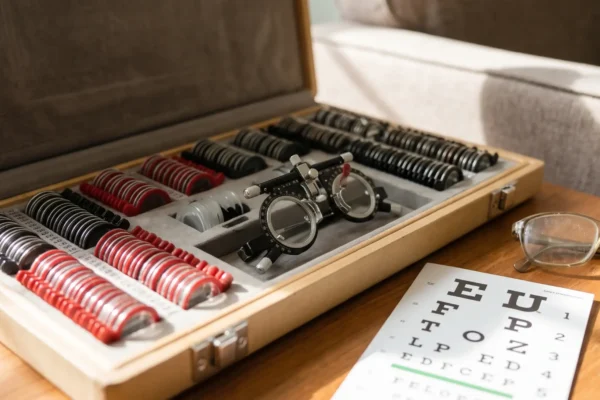
Each of these has a portable version. The acuity chart becomes a hand-held card, the trial lens set replaces the wall-mounted machine, and a hand-held tonometer measures pressure without a desk unit. Dilation works the same way at a kitchen table as it does in an office.
One practical note from the NEI applies at home as well. Vision stays blurry and light-sensitive for a few hours after dilation, which at home means arranging the rest of the day around it rather than arranging a ride.
What a Home Visit Cannot Replace
That does not reduce the value of the home exam. Finding the problem is what triggers everything else, and the NEI is blunt that many eye diseases produce no symptoms or warning signs at all in their early stages.
How Are Eyeglasses Fitted at Home?
Measuring and Choosing Frames
The lenses are then made at a laboratory, and the finished pair comes back for adjustment. Bending temples and setting nose pads matters more for an older face than most people expect, since glasses that slide down get looked over rather than through.
Bring out the current pair when the doctor arrives. Reading the old lenses shows how much the prescription has moved, which is useful information when the patient cannot describe the change in words.
Is Sudden Vision Loss Just Part of Getting Older?
Changes That Come With Age
Cataracts are common too, and they develop slowly. The National Eye Institute (2026) reports that more than half of all Americans aged 80 or older either have cataracts or have had surgery to remove them, with vision turning blurry, hazy or less colorful over time.
Changes That Are Not About Age
The CDC names the leading causes of blindness and low vision in the United States as age-related macular degeneration, cataract, diabetic retinopathy and glaucoma. All four are conditions with treatments and all four are easier to manage when found early.
Some vision changes also arrive with other symptoms that point somewhere else entirely. A new headache with tender temples after 60 is one example worth reading about, since it can threaten sight, and a red painful eye is another case where telling uveitis from a pink eye changes what happens next. Our article on a new temporal headache after 60 covers that pattern in detail.
Does Medicare Cover a Home Eye Exam or New Glasses?
What Part B Does and Does Not Pay
For that covered pair you still owe a share of the approved amount once the Part B deductible is met, and any upgrade to the frames is yours to pay. Medicare also pays only when the supplier participates in Medicare, which is worth confirming with a mobile service before the order is placed.
| What You Need | Original Medicare Coverage |
|---|---|
| A routine eye exam for a glasses prescription | Not covered, you pay all costs |
| Eyeglasses or contact lenses in general | Usually not covered |
| One pair of glasses or contacts after cataract surgery with a lens implant | Covered under Part B, with a share of the cost left to you |
| Upgraded frames on that covered pair | You pay the extra cost |
| Vision benefits beyond the list above | Some Medicare Advantage plans add them, so ask the plan |
Treat the table as a starting point for one phone call, not as a quote. Coverage depends on the plan a person actually holds, and Medicare notes that some Medicare Advantage plans add vision benefits that Original Medicare does not include. The plan’s own member services line is the only place to confirm what applies.
Who Benefits Most From an Eye Doctor Who Travels?
The clearest cases are people who cannot transfer safely, people who use a wheelchair or stay in bed for most of the day, and people with dementia for whom an unfamiliar clinic turns a twenty-minute exam into an ordeal. Residents of assisted living and board and care homes fall into the same group.
The Group That Keeps Postponing
Vision also feeds into problems that look unrelated. Poor sight raises the odds of a fall, which is why a home fall risk assessment usually includes a look at lighting and glasses. For someone who spends most of the day in bed, the same visit is a chance to notice the early skin changes covered in our article on bedsores and pressure sore prevention.
How Do You Arrange a Home Eye Exam in Pasadena?
- That they cover the address, not just the general city
- What equipment they bring, and whether they can dilate and examine the back of the eye
- How the finished glasses get delivered and adjusted afterward
Those three answers tell you whether the visit will accomplish what you actually need. A service that examines but cannot supply eyewear leaves you arranging a second provider for the glasses.
Ask also what the provider needs from you. Clear access to a chair or bedside, a lamp that can be moved, the current glasses, and a written list of medicines all shorten the visit. The NEI advises bringing a list of questions and telling the examiner which medicines are being taken, since some affect the eyes.
What Else Is Often Overdue
None of this requires a crisis to set in motion. An exam booked while vision is merely annoying tends to end with a new prescription, while one booked after a fall tends to end with a longer list.
Frequently Asked Questions
How long does a home eye exam usually take?
Plan for about an hour, and a little longer for a first visit or when a prescription needs several checks. Dilation drops add waiting time, since they need some minutes to take effect before the back of the eye can be examined.
Can a mobile eye doctor see someone with dementia who will not cooperate?
Often yes, and familiar surroundings usually help. Tests can be shortened or spread across two visits, and a caregiver who knows the person can make the difference between an exam that works and one that does not.
Will the glasses be ready the same day?
No. Frames are selected and measured at the visit, then the lenses are made at a laboratory, so a second trip is needed to deliver and adjust them. Services that include delivery do that part at the house too.
What if the exam finds something that needs surgery?
The mobile provider refers out. Cataract removal and injections for retinal disease happen in a clinic or surgical center, and the home exam serves to identify the problem and get the referral started.
Can a bedbound person be examined lying down?
Much of an exam can be done with the person seated upright in bed or in a wheelchair, and portable equipment is designed for that. Ask the provider what positioning they need before the visit so the room can be set up.
Does the eye doctor need the person’s old glasses and medication list?
Yes to both. Reading the current lenses shows how far the prescription has drifted, and some medicines affect the eyes, so the list is worth having out on the table when the doctor arrives.
Sources Used
Cataracts – National Eye Institute, National Institutes of Health (2026)
Eye exams (routine) – Medicare.gov, Centers for Medicare & Medicaid Services
Eyeglasses & contact lenses – Medicare.gov, Centers for Medicare & Medicaid Services
Get a Dilated Eye Exam – National Eye Institute, National Institutes of Health (2025)
Low Vision – National Eye Institute, National Institutes of Health (2025)
What Is an Ophthalmologist vs Optometrist? – AAO (2026)
Retinal diseases – Symptoms and causes – Mayo Clinic (2024)